Self-Hosting & Homelab
How to Deploy Uptime Kuma on a Raspberry Pi for Homelab Monitoring
System administrators deploy Uptime Kuma on Raspberry Pi hardware to isolate network monitoring...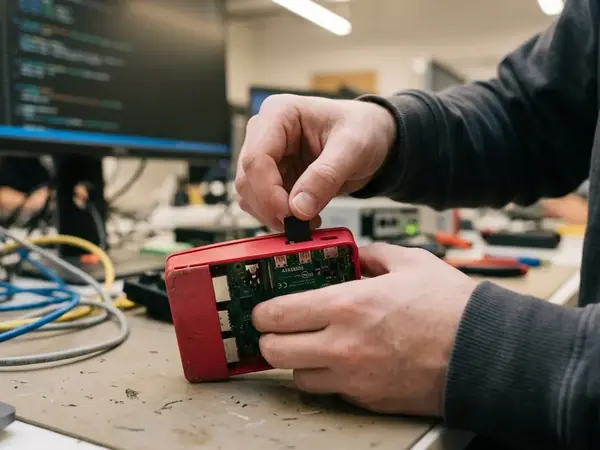

ESC closes search

Whether you are deploying a Raspberry Pi homelab or optimizing a production LEMP stack, you belong here. Access precise, practical tutorials designed for developers who demand absolute control over their infrastructure.



Default configurations often leave significant hardware capacity unutilized. By adjusting buffer sizes, implementing aggressive caching strategies, and securing network perimeters, system administrators can reduce latency. Our documentation provides the configuration details for these optimizations.
Our research spans bare-metal server configuration to local network ad-blocking. Select a domain below to access our technical documentation.

Guides on configuring, securing, and maintaining Linux servers, focusing on CentOS and LEMP stacks.

Tutorials for deploying self-hosted applications, ad-blockers, and media servers on local networks.

Technical setups for email delivery systems and SMTP relays using Amazon SES and Sendy.
Performance profiling indicates that unoptimized database queries and missing object caches are the primary bottlenecks in dynamic web applications. To address this, our engineering team tests deployment scripts before publication.

Senior Systems Architect Brent Wilson leads our high-performance infrastructure research, documenting the tuning parameters required to reclaim server overhead. Marcus Bancroft oversees our server administration protocols, ensuring every CentOS deployment meets strict security baselines. Linnea Holmström directs our self-hosting and homelab research, translating enterprise-grade architecture into viable local network deployments.
While our Nginx caching directives produce fast response times in testing environments, real-world latency will naturally fluctuate based on your specific upstream network conditions. We focus on establishing an optimal baseline that minimizes server-side processing delays.
Every tutorial undergoes a structured validation process. We provision fresh virtual machines, execute the documented commands sequentially, and measure the resulting system state against our expected outcomes.

Regression tests support our baseline configurations across multiple hardware iterations, from low-power Raspberry Pi clusters to dedicated bare-metal servers. This ensures that a configuration designed for a high-traffic web server does not inadvertently exhaust the memory constraints of a smaller homelab device.
We validate our deployment scripts against upcoming release candidates. This proactive testing helps ensure that our security protocols remain effective across major version upgrades.

By standardizing our approach to system administration, we eliminate the guesswork from server deployment. Whether you are configuring a local DNS sinkhole or a distributed caching layer, our documentation provides the necessary technical foundation.
Read Our Full MethodologyDefine requirements and architecture.
Develop, test, and iterate.
Launch and monitor in production.

